
How to choose the top 5 tire tread penny test guide
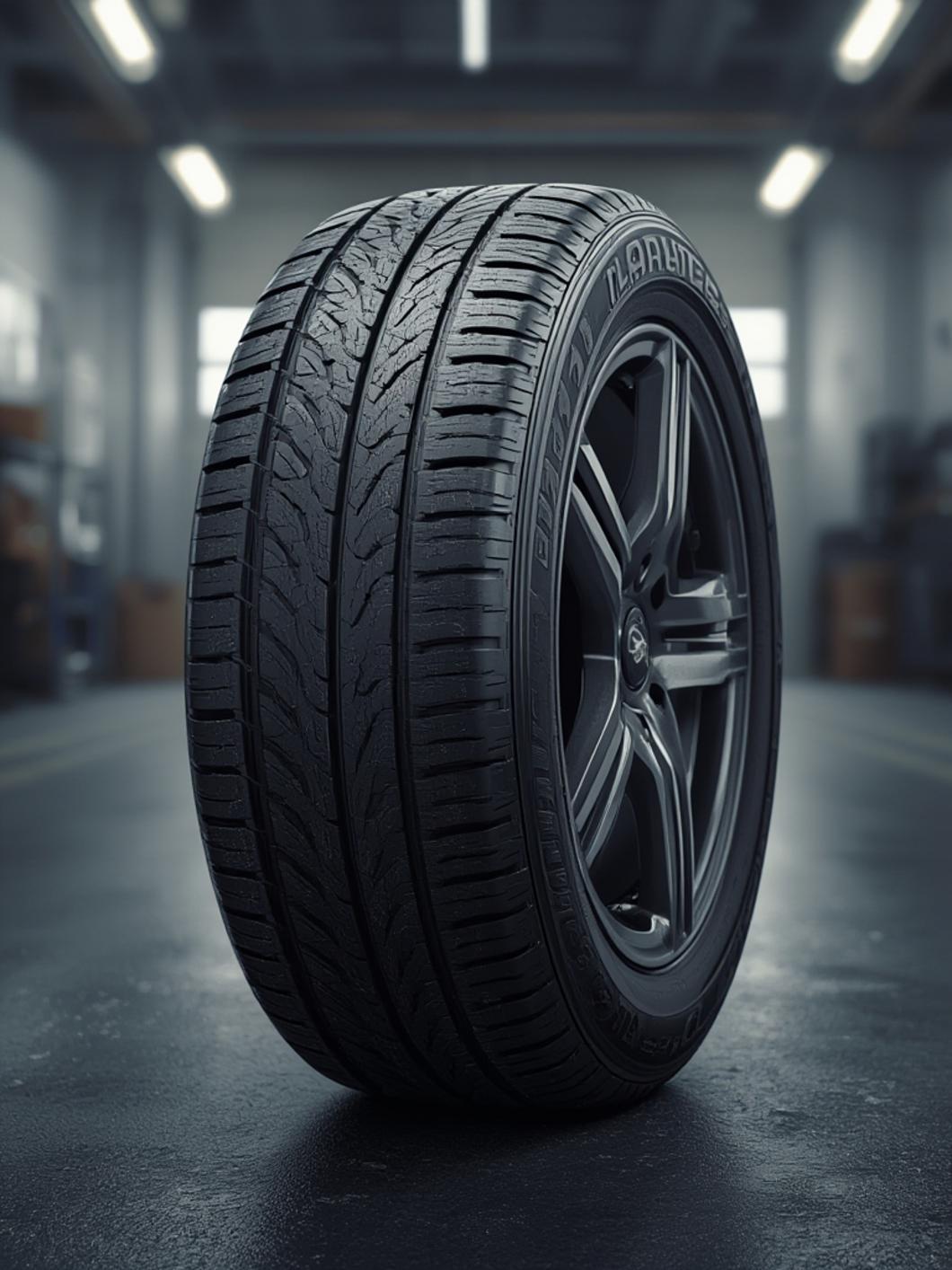
Have you ever wondered if your tires are still safe to drive on, or if they’re silently compromising your safety with every mile? Performing a tire tread penny test at home is one of the simplest yet most effective ways to check your tire condition without professional equipment.
Table of Contents
This quick assessment, along with using a tire depth gauge, can help you determine whether your tires need replacement before they become dangerous. Regular monitoring of your tread depth is essential for maintaining optimal vehicle performance, ensuring safety on wet roads, and avoiding unexpected tire failures.
Materials & Supplies
To properly assess and maintain your tires, you’ll need:
1. A penny (for the penny test)
2. A tire depth gauge (more precise than the penny)
3. Tire pressure gauge
4. Air compressor or access to an air pump
5. Flashlight for better visibility
6. Clean cloth to wipe tires for inspection
7. Notebook to record measurements and dates
8. Safety gloves (optional but recommended)
9. Jack and jack stands (for thorough inspections)
10. Tire chalk (for marking positions during rotation)
Timing / Inspection Schedule

Tire tread inspections should be performed monthly and before long trips. Most experts recommend checking your treads every 3,000 miles or at least once per season, with special attention during transitional weather periods (fall to winter, winter to spring). The inspection itself takes only 2-5 minutes per tire.
Seasonal changes demand particular attention—winter requires deeper treads for snow and ice traction (typically 4/32″ minimum), while summer heat can accelerate wear patterns. If you regularly drive on rough roads or carry heavy loads, increase inspection frequency to bi-weekly checks.
Step-by-Step Instructions
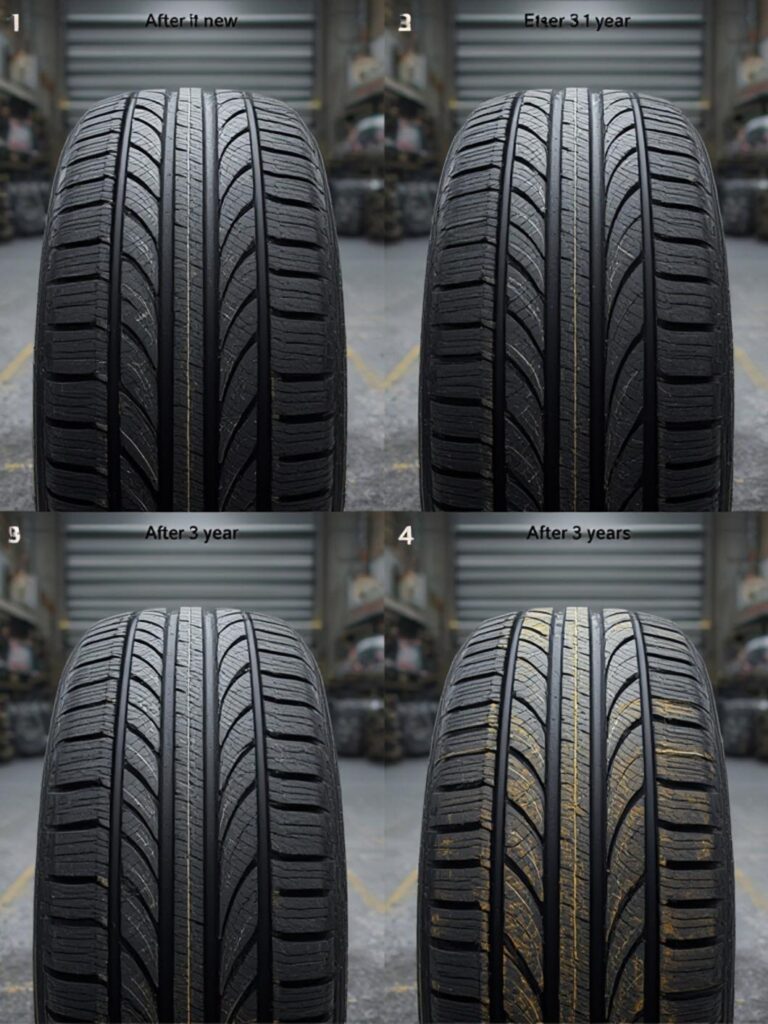
1. Prepare for inspection: Park on level ground and ensure tires are cool for accurate assessment.
2. Conduct the tire tread penny test: Insert a penny into several tread grooves across each tire with Lincoln’s head pointing downward. If you can see the top of Lincoln’s head, your tread depth is less than 2/32″ and the tire needs immediate replacement.
3. Use a tire depth gauge for precision: Insert the probe into the tread grooves. The legal minimum is 2/32″, but 4/32″ is recommended for wet conditions.
4. Check multiple points: Measure at least three locations across each tire to detect uneven wear patterns.
5. Examine wear indicators: Most tires have built-in wear bars that become flush with the tread when worn to 2/32″.
6. Document your findings: Record measurements to track wear progression over time.
Benefits / Advantages
Regular tire tread monitoring offers numerous benefits:
– Prevents hydroplaning on wet roads by ensuring proper water dispersion
– Increases stopping distance effectiveness, potentially saving lives
– Extends tire lifespan through early detection of alignment or inflation issues
– Improves fuel economy by maintaining proper tire condition
– Reduces the risk of blowouts and unexpected roadside emergencies
– Saves money by identifying problems before catastrophic failure occurs
Tips, Alternative Methods, or Driving Advice
Beyond the penny test, consider these additional approaches:
– Use a quarter instead of a penny for a more conservative test (4/32″ instead of 2/32″)
– Download smartphone apps that can estimate tread depth from photos
– Mark your tires with chalk to detect unusual wear patterns between inspections
– Adjust driving habits in wet conditions if treads are approaching minimum depth
– Consider winter/snow tires if you regularly drive in temperatures below 45°F
– Rotate tires every 5,000-8,000 miles to ensure even wear
Common Mistakes to Avoid
– Checking only one spot on the tire instead of multiple locations
– Ignoring center tread wear (often indicates overinflation)
– Dismissing edge wear (typically signals underinflation)
– Waiting until tires “look bad” before checking depth
– Neglecting to check all four tires (including the spare)
– Assuming new-looking tires are safe without measurement
– Ignoring seasonal considerations for tread requirements
Storage / Maintenance Tips
When storing tires:
– Keep them in a cool, dry location away from direct sunlight
– Store vertically or stacked with cardboard between them
– Maintain proper inflation even during storage
– Clean tires before storage to remove road grime and chemicals
– Consider tire covers for long-term protection
– Elevate tires off concrete floors to prevent moisture damage
Conclusion
The tire tread penny test and using a tire depth gauge are simple yet powerful ways to maintain your safety on the road. These quick checks can help you identify dangerous wear before it leads to accidents or expensive damage. Remember, your tires are the only point of contact between your vehicle and the road—their condition directly impacts your safety and driving experience. Take five minutes monthly to inspect them, and you’ll enjoy improved performance, better fuel economy, and most importantly, enhanced safety for you and your passengers.
FAQs
How often should I perform the penny test on my tires?
You should check your tire tread depth monthly and before long trips or extreme weather conditions. Regular inspections help catch problems early.
What’s more accurate: the penny test or a tire depth gauge?
A tire depth gauge provides more precise measurements in 32nds of an inch, while the penny test is a quick, convenient method when a gauge isn’t available.
Can I drive with tires that barely pass the penny test?
While legally acceptable at 2/32″, tires with this minimal tread depth perform poorly in wet conditions. Consider replacement at 4/32″ for safety.
Do I need to check tread depth in multiple places on each tire?
Yes, checking multiple spots across each tire helps identify uneven wear patterns that might indicate alignment, inflation, or suspension issues.
How does tire tread depth affect fuel economy?
Worn tires with uneven tread patterns increase rolling resistance, forcing your engine to work harder and consume more fuel. Properly maintained tires can improve fuel efficiency by 3-5%.