
Top rated car tire pressure tips: 5 essential checks
Have you ever experienced that unsettling wobble while driving or noticed your vehicle pulling to one side? These could be warning signs of improper car tire pressure. Maintaining the correct pressure isn’t just about comfort—it’s essential for your safety, vehicle performance, and wallet.
Table of Contents
With a reliable tire pressure monitoring system, you can stay ahead of potential issues before they become dangerous or costly. Let’s explore how you can properly manage your tire pressure at home and why it matters so much for everyday driving.
Materials & Supplies
To effectively maintain your tires at home, you’ll need:
1. Tire Pressure Gauge – Digital or analog for accurate readings
2. Air Compressor – Portable or home garage model for inflation
3. Tire Tread Depth Gauge – To check tread wear levels
4. Owner’s Manual – Contains vehicle-specific pressure recommendations
5. Notebook or App – For tracking pressure readings and maintenance dates
6. Valve Stem Caps – Replacements if any are missing
7. Microfiber Cloth – For cleaning valve stems before checking pressure
8. Soapy Water in Spray Bottle – To check for slow leaks
9. Safety Gloves – Protects hands during maintenance
10. Flashlight – For inspecting tires in poor lighting conditions
Optional: A tire pressure monitoring system for real-time alerts about pressure changes.
Timing / Inspection Schedule

Tire pressure should be checked at least once a month and before long trips. The best time to check is when tires are “cold” – meaning the vehicle hasn’t been driven for at least three hours. Temperature changes affect pressure significantly, with pressure dropping approximately 1 PSI for every 10°F decrease. Seasonal changes require special attention:
– Spring/Summer: Check more frequently as temperatures rise
– Fall/Winter: Expect pressure drops; adjust accordingly
– After Temperature Swings: Recheck when temperature changes by 20°F or more
Most experts recommend inspecting tires every 3,000-5,000 miles, coinciding with oil changes to make it easier to remember.
Step-by-Step Instructions
1. Consult Your Manual: Find the recommended car tire pressure in your vehicle’s manual or driver’s door jamb sticker (not the maximum PSI on the tire itself).
2. Prepare Your Tools: Ensure your pressure gauge is working properly and your compressor is ready.
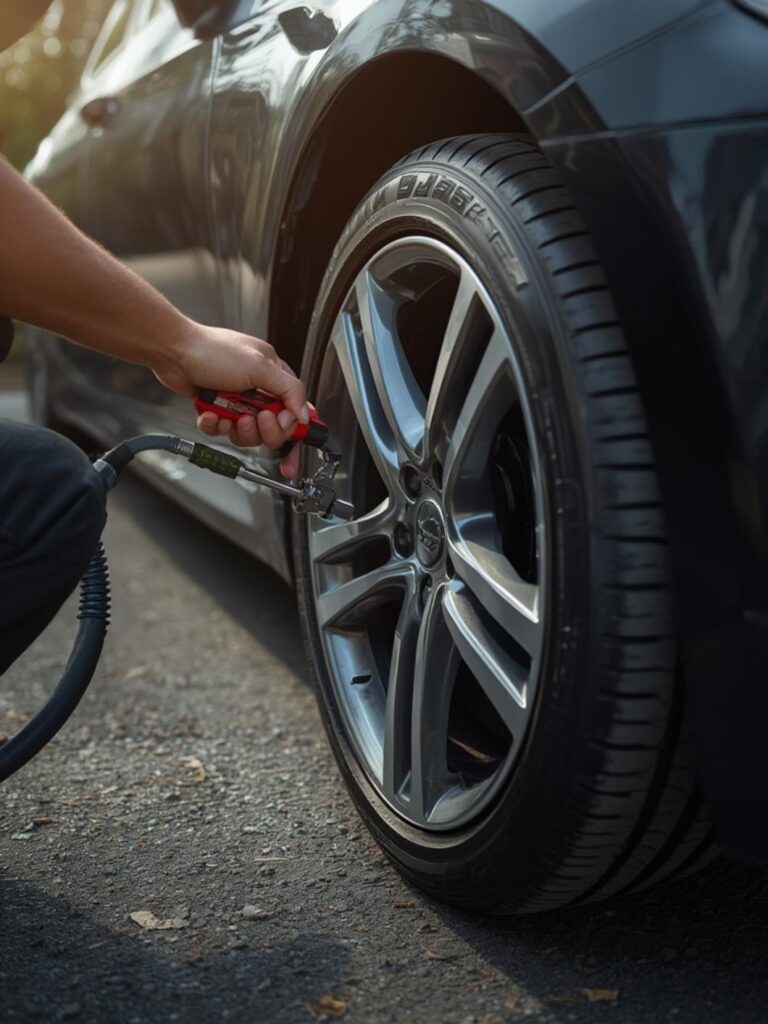
3. Remove Valve Caps: Unscrew them carefully and store in a safe place to avoid loss.
4. Check Current Pressure: Press the gauge firmly onto the valve stem until the hissing sound stops. Note the reading.
5. Add Air If Needed: If pressure is low, use your compressor to add air in short bursts, checking between each addition.
6. Release Air If Needed: If pressure is too high, press the center pin of the valve stem with the back of the gauge or a small tool.
7. Recheck: Verify the pressure has reached the recommended level.
8. Replace Valve Caps: This prevents dirt from entering and causing slow leaks.
9. Document: Record the date and pressure readings for future reference.
10. Repeat: Check all tires, including the spare, following the same process.
Benefits / Advantages
Maintaining proper tire pressure provides numerous benefits:
– Safety Enhancement: Reduces blowout risks and improves handling in emergency maneuvers
– Extended Tire Life: Can increase tire lifespan by up to 20%
– Fuel Economy: Improves fuel efficiency by up to 3% (saving approximately $0.10 per gallon)
– Smoother Ride: Eliminates irregular vibrations and improves comfort
– Environmental Impact: Reduces carbon emissions through better efficiency
– Cost Savings: Minimizes premature wear, saving hundreds in replacement costs
– Improved Braking: Reduces stopping distances, especially on wet roads
Tips, Alternative Methods, or Driving Advice
– Nitrogen Inflation: Consider nitrogen for more stable pressure in varying temperatures
– Invest in Quality: Premium gauge accuracy can vary by ±0.5 PSI compared to ±2-3 PSI for cheap models
– Visual Inspection: While checking pressure, look for bulges, cracks, or embedded objects
– Rotation Impact: After tire rotation, recheck pressure as positions can affect readings
– High-Performance Vehicles: May need more frequent checks due to stiffer sidewalls
– App Integration: Some smart gauges connect to phone apps for tracking and alerts
– Regional Adjustments: Increase pressure by 2-4 PSI for high-altitude driving
Common Mistakes to Avoid
1. Using Tire Sidewall PSI: This is the maximum pressure, not the recommended level
2. Checking When Hot: Can lead to false high readings; wait for tires to cool
3. Eyeballing Pressure: Visual inspection cannot accurately determine pressure levels
4. Inconsistent Checking: Sporadic maintenance leads to uneven wear patterns
5. Ignoring Slow Leaks: Address even minor pressure drops promptly
6. Mismatched Pressures: Different pressures across tires affects handling significantly
7. Neglecting Spare Tire: Often overlooked until needed in an emergency
Storage / Maintenance Tips
– Clean Before Storage: Remove debris and wash with mild soap if storing long-term
– Pressure Maintenance: Keep stored tires inflated to 5-10 PSI above normal
– Position Matters: Store upright or stacked, never hanging
– Environment Control: Keep away from direct sunlight, heat sources, and ozone-producing equipment
– Surface Protection: Store on clean, dry surfaces or tire racks
– Rotation Schedule: Maintain a 5,000-7,000 mile rotation schedule
– Seasonal Considerations: Consider dedicated winter tires for severe cold climates
Conclusion
Proper car tire pressure maintenance is one of the simplest yet most impactful aspects of vehicle care that drivers can manage themselves. By following this guide and investing in a reliable tire pressure monitoring system, you’re not just extending the life of your tires—you’re enhancing your safety, improving fuel efficiency, and ensuring optimal vehicle performance. Make tire pressure checks part of your regular maintenance routine, and you’ll enjoy the benefits of smoother, safer, and more economical driving. We’d love to hear about your tire maintenance experiences or any questions in the comments below!
FAQs
Q: How much does tire pressure typically drop during winter months?
A: Tire pressure typically drops 1-2 PSI for every 10°F temperature decrease. In regions with severe winters, expect a 5-8 PSI drop from summer to winter months.
Q: Can I check tire pressure immediately after driving?
A: It’s best to wait at least 3 hours after driving for an accurate “cold” tire reading. If you must check warm tires, add 4-5 PSI to the recommended cold pressure.
Q: Will slightly overinflated tires improve fuel economy?
A: While slight overinflation (1-2 PSI above recommendations) may marginally improve fuel economy, it reduces traction and handling while accelerating tire wear in the center of the tread.
Q: How accurate are the built-in tire pressure sensors in modern vehicles?
A: Most factory TPMS systems have a margin of error of ±1-3 PSI and only alert you when pressure drops 25% below the recommended level, making manual checks still necessary.
Q: How often should valve stems be replaced?
A: Rubber valve stems should be replaced every 4-5 years or when tires are replaced. Metal valve stems on TPMS sensors typically last the life of the sensor (5-10 years).