
Best performance how long do tires last in years
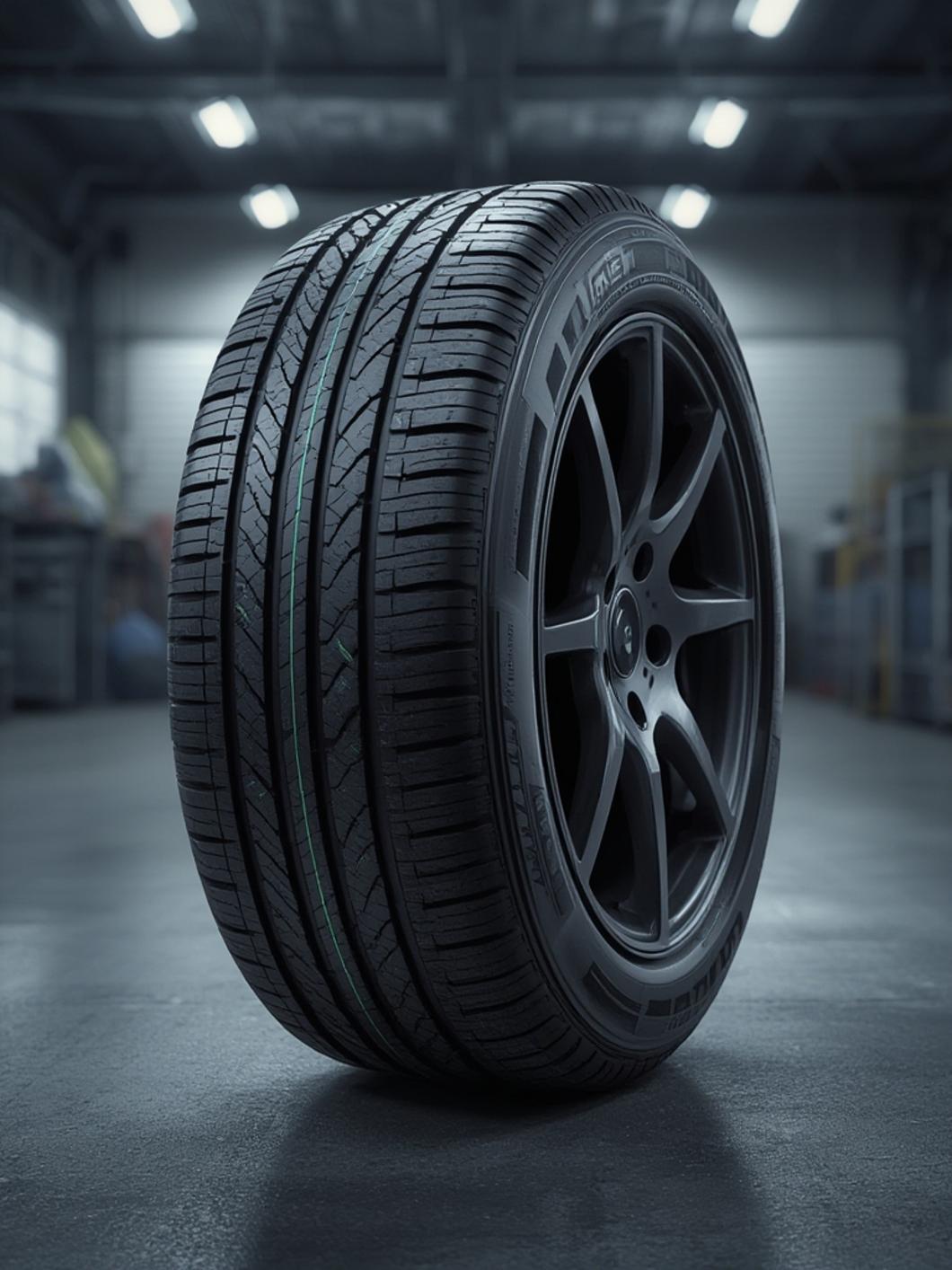
Wondering how to maximize your investment in quality tires? Understanding how long do tires last in years can help you plan for replacements and ensure your safety on the road. While most manufacturers design tires to deliver 60,000 miles of service, actual car tire lifespan varies dramatically based on maintenance practices, driving habits, and environmental factors.
Table of Contents
With proper care, you can extend your tire’s useful life significantly, saving money and ensuring optimal performance throughout their service period.
Materials & Supplies
To properly maintain your tires at home, you’ll need:
- Tire pressure gauge: Digital models offer precise readings (accuracy within 0.5 PSI)
- Portable air compressor: Look for units that can reach at least 35 PSI
- Tread depth gauge: Measures remaining tread in 32nds of an inch
- Jack and jack stands: Rated for your vehicle’s weight
- Torque wrench: Essential for proper lug nut tightening
- Tire shine/protectant: UV protection prevents sidewall cracking
- Clean microfiber cloths: For applying protectants without scratching
- Soap and water: For routine cleaning
- Chalk: For marking tire positions during rotation
- Notebook or app: To track maintenance history
Timing / Inspection Schedule
Implementing a consistent inspection schedule dramatically affects how long your tires will serve you:
- Monthly pressure checks: Tires naturally lose 1-2 PSI per month
- Tread inspection: Every 3,000 miles or quarterly
- Tire rotation: Every 5,000-8,000 miles (approximately twice yearly)
- Wheel alignment: Annually or after hitting significant potholes
- Balance check: Every 12,000 miles or when vibration occurs
- Complete tire inspection: Seasonally (4 times yearly)
- Age assessment: Replace tires that are 6-10 years old regardless of tread depth
Remember that extreme temperatures accelerate aging – check more frequently during summer heat waves or freezing conditions.
Step-by-Step Instructions
1. Check tire pressure monthly
* Measure when tires are cold (before driving more than a mile)
* Match pressure to vehicle manufacturer specs (found in doorjamb or manual)
* Add air slowly, rechecking frequently to avoid over-inflation
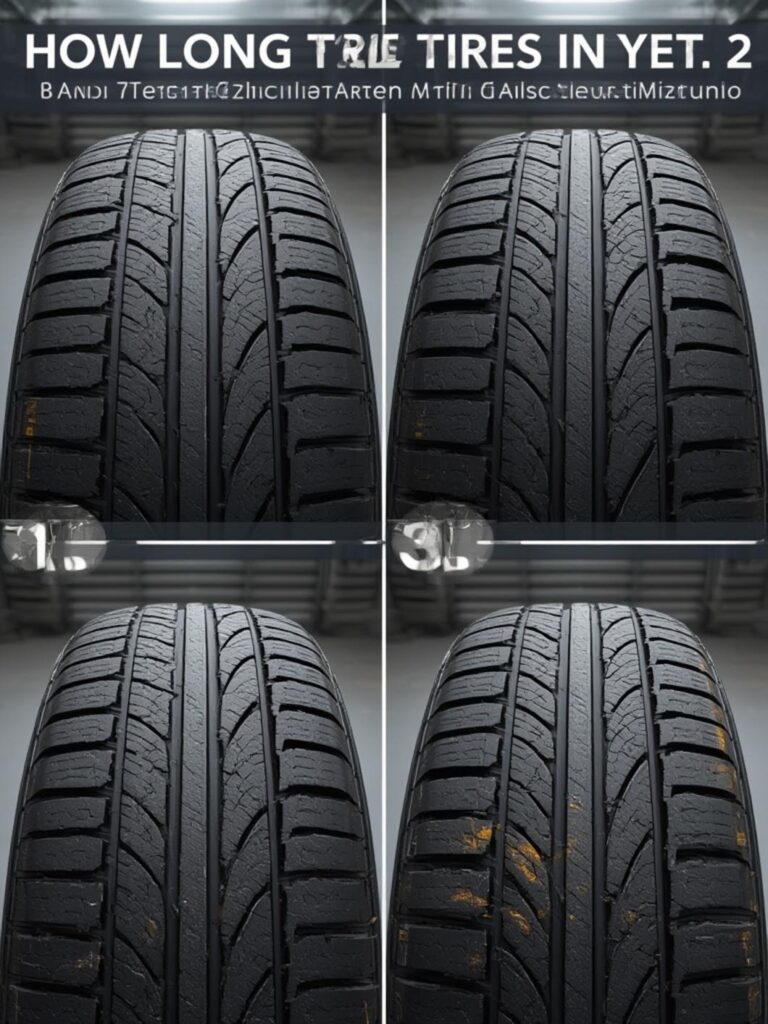
2. Inspect tread depth regularly
* Insert a penny upside-down in tread groove – if Lincoln’s head is visible, replacement is needed
* Look for uneven wear patterns that may indicate alignment issues
* Ensure all tires have at least 4/32″ of tread depth for wet conditions
3. Rotate tires according to pattern
* Follow X-pattern for front-wheel drive vehicles
* Follow front-to-rear pattern for rear-wheel drive
* Document rotation date and mileage
4. Clean and protect tires quarterly
* Wash with mild soap and water to remove brake dust and road grime
* Apply water-based protectant to prevent UV damage
* Avoid petroleum-based products that can cause cracking
The average how long do tires last in years ranges from 3-5 years with normal driving, but proper maintenance can extend car tire lifespan considerably while maintaining safety performance.
Benefits / Advantages
Diligent tire maintenance delivers significant rewards:
- Enhanced safety: Properly maintained tires reduce stopping distance by up to 30%
- Improved fuel economy: Correct inflation saves approximately 3.3% on fuel costs
- Extended service life: Regular rotation adds 8,000-10,000 miles to tire life
- Smoother ride: Balanced tires reduce vibration and driver fatigue
- Lower lifetime costs: Maximizing tire life reduces annual vehicle operating expenses
- Better handling: Properly maintained tires respond more predictably in emergency maneuvers
Tips, Alternative Methods, or Driving Advice
- Speed management: Driving 65 mph instead of 75 mph can extend tire life by up to 20%
- Gentle acceleration: Avoiding jackrabbit starts prevents premature wear
- Storage solutions: Keep seasonal tires in opaque bags away from ozone sources
- Winter considerations: Use dedicated winter tires when temperatures consistently drop below 45°F
- Load awareness: Don’t exceed tire load ratings when hauling or towing
- Nitrogen inflation: Consider for more stable pressure in varying temperatures
Common Mistakes to Avoid
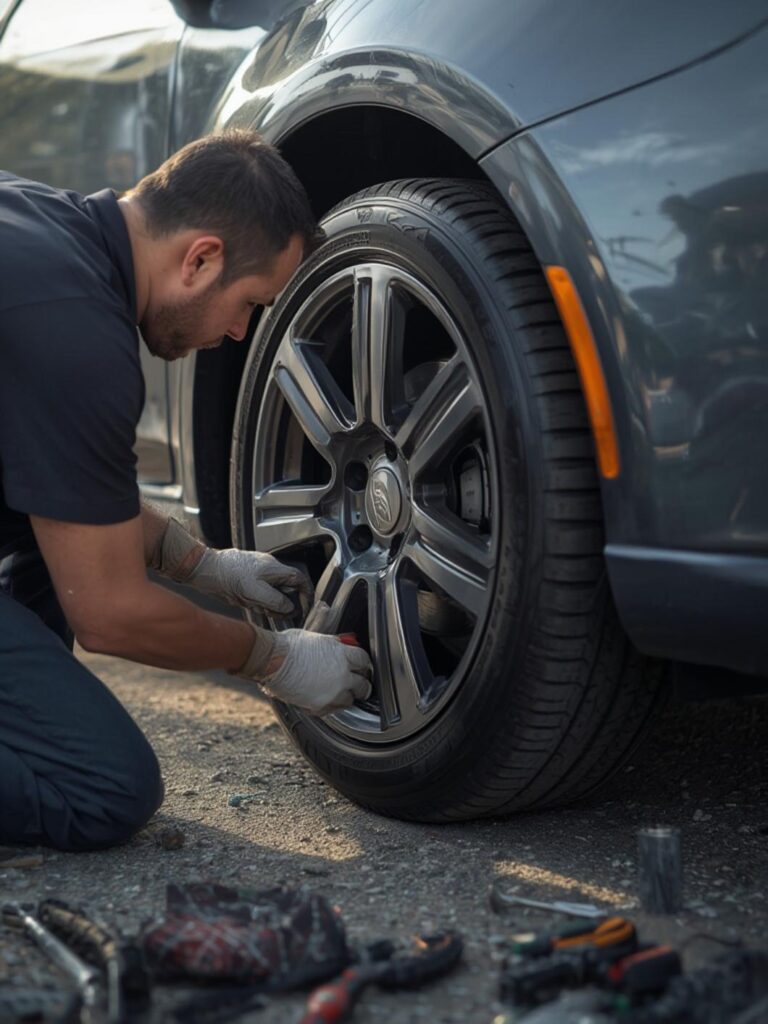
- Mixing tire types: Never use different models on the same axle
- Ignoring sidewall damage: Bulges or cracks require immediate replacement
- Using tire shine on treads: Products can reduce traction
- Driving on severely worn tires: Increases hydroplaning risk by 300%
- Over/under inflation: Either extreme accelerates wear and reduces handling
- Mismatched pressure: All tires should be inflated to the same specification
Storage / Maintenance Tips
- Clean thoroughly: Remove all dirt before storage
- Store upright: Stack horizontally only if unavoidable
- Climate control: Keep between 50-80°F with moderate humidity
- Cover tires: Use breathable covers to prevent ozone damage
- Elevate vehicle: Use jack stands for long-term storage to prevent flat spots
- Rotate position: If stored more than 30 days, reposition to prevent deformation
Conclusion
Proper tire maintenance isn’t just about extending car tire lifespan it’s an investment in safety, performance, and vehicle longevity. By following these guidelines, you can maximize how long do tires last in years while ensuring optimal performance throughout their service period. Take time each month for basic inspections, and schedule more comprehensive maintenance quarterly. Share your tire maintenance routines or questions in the comments below, and check out our related articles on tire selection and seasonal care.
FAQs
Q: Should I replace all four tires at once?
A: Ideally, yes. Replacing all four tires simultaneously ensures balanced handling and traction. If replacing only two, install them on the rear axle regardless of drive type for better stability.
Q: Can I mix brands or models when replacing tires?
A: It’s not recommended. Different brands or models have varying handling characteristics. At minimum, keep identical tires on the same axle.
Q: How can I tell a tire’s age?
A: Look for the DOT code on the sidewall. The last four digits indicate manufacturing date (week and year). For example, “1220” means the 12th week of 2020.
Q: Will keeping my tires clean extend their life?
A: Yes. Regular cleaning removes corrosive substances like road salt and prevents premature sidewall aging from UV damage when combined with protectants.
Q: Is the penny test accurate for measuring tire tread?
A: While convenient, a dedicated tread depth gauge provides more precise measurements. The penny test (2/32″) indicates legal minimum, but tires should be replaced at 4/32″ for wet conditions.