
Best performance how to check tire pressure in 5 steps
Have you ever wondered how those small rubber components supporting your vehicle could significantly impact your driving experience? Proper tire maintenance is one of the most overlooked aspects of vehicle care, yet it directly affects your safety, fuel economy, and wallet.
Table of Contents
Learning how to check tire pressure is a fundamental skill every driver should master. With a quality tire pressure gauge and a few minutes of your time, you can ensure optimal performance and extend the life of your tires significantly.
Materials & Supplies
To properly check and maintain your tire pressure, you’ll need these essential tools:
1. Digital or Analog Pressure Gauge – A reliable tire pressure gauge is your primary tool. Digital versions offer precise readings, while stick or dial gauges are affordable alternatives.
2. Air Compressor – Whether it’s a portable model or one at a gas station, you’ll need a way to add air.
3. Valve Caps – Small but important for preventing dirt and moisture from entering the valve stems.
4. Owner’s Manual – Contains your vehicle’s recommended tire pressure specifications.
5. Notebook or App – For tracking pressure readings and maintenance history.
6. Microfiber Cloth – For cleaning valve stems before taking measurements.
7. Flashlight – Helpful when checking tires in low-light conditions.
Timing / Inspection Schedule
Tire pressure should be checked at least once a month and before long trips. The optimal time to check is when tires are “cold” – meaning the vehicle hasn’t been driven for at least three hours. This provides the most accurate reading, as driving warms the tires and increases pressure readings.
Seasonal changes significantly impact tire pressure – for every 10°F change in temperature, your tire pressure changes by about 1 PSI. Therefore, it’s particularly important to check during seasonal transitions:
– Early spring as temperatures rise
– Late fall as temperatures drop
– Mid-summer during extreme heat
– Mid-winter during extreme cold
Step-by-Step Instructions
1. Locate Your Vehicle’s Recommended Pressure – Find this information in your owner’s manual or on the driver’s side door jamb sticker. Note that front and rear tires may require different pressures.
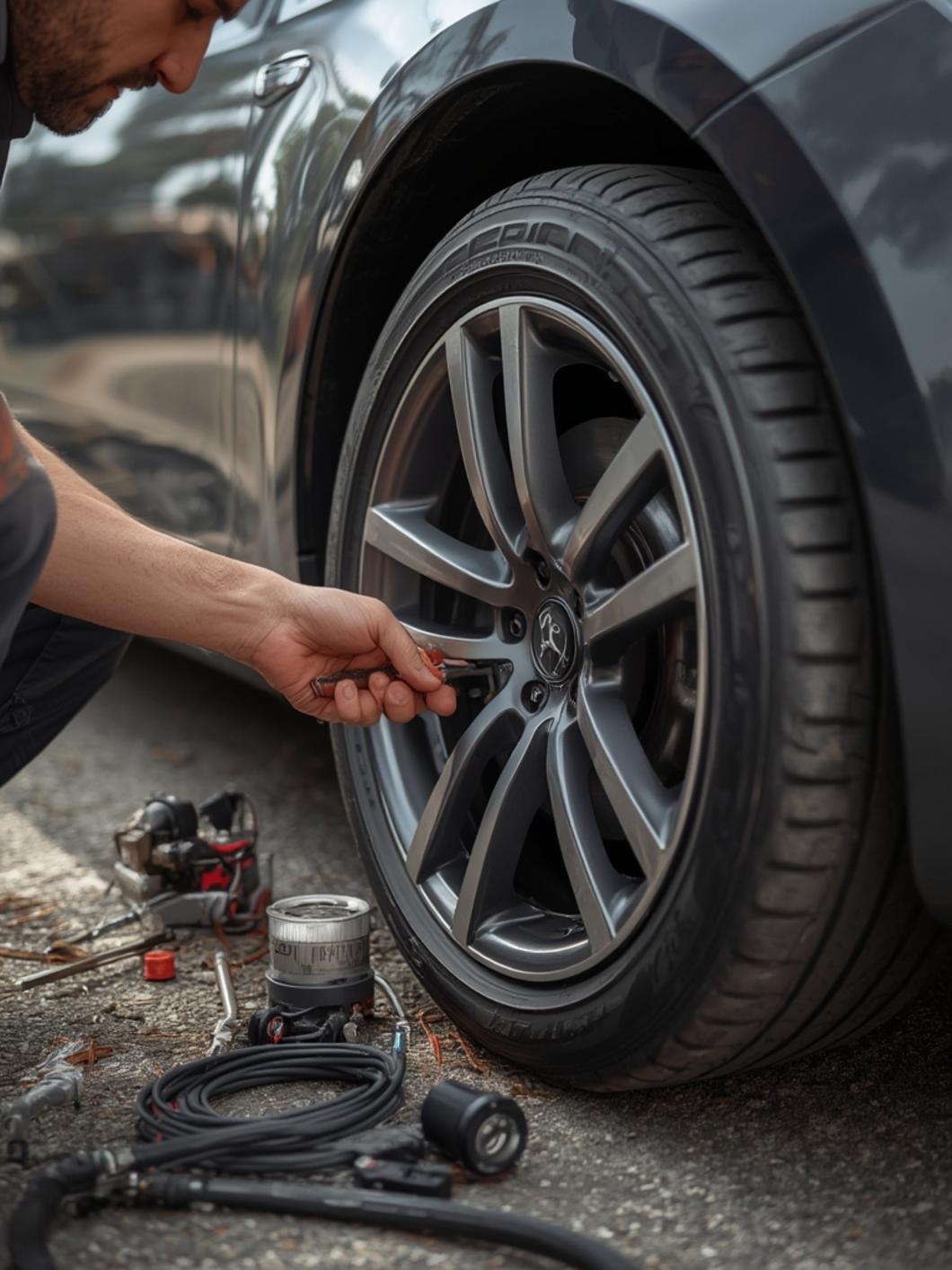
2. Prepare Your Tires – Ensure tires are cold for accurate readings. Remove the valve cap from the first tire and store it somewhere secure.
3. Use Your tire pressure gauge – Press the gauge firmly onto the valve stem until the hissing sound stops. Digital gauges will display the pressure immediately; stick gauges require you to read the extended measuring stick.
4. Compare With Recommendations – Check if the current pressure matches the recommended PSI. If it’s too low, you’ll need to add air; if too high, you’ll need to release some.
5. Adjust as Needed – To add air, press the air hose nozzle firmly onto the valve stem. To release air, press the small pin in the center of the valve stem with the back of your gauge or a small tool.
6. Recheck and Repeat – After adjusting, check the pressure again to confirm it’s at the recommended level. Replace the valve cap securely.
7. Record Your Readings – Keep a log of your tire pressure readings to identify patterns or potential leaks. Learning how to check tire pressure properly includes documenting results.
8. Repeat for All Tires – Don’t forget to check your spare tire too!
Benefits / Advantages
Properly maintaining tire pressure provides numerous benefits:
– Improved Safety – Correctly inflated tires provide better handling, traction, and shorter braking distances.
– Extended Tire Life – Even wear patterns can add thousands of miles to your tire lifespan.
– Better Fuel Economy – Underinflated tires can reduce gas mileage by 0.2% for every 1 PSI below recommendation.
– Enhanced Comfort – Proper inflation provides a smoother ride with less road noise.
– Reduced Blowout Risk – Maintaining correct pressure significantly lowers the risk of catastrophic tire failure.
Tips, Alternative Methods, or Driving Advice
– Invest in a Portable Compressor – For emergencies and convenience, a portable compressor that plugs into your car’s 12V socket is invaluable.
– Consider TPMS Sensors – Aftermarket Tire Pressure Monitoring Systems can provide real-time pressure alerts.
– Use Nitrogen Inflation – Nitrogen molecules are larger than oxygen, resulting in slower pressure loss over time.
– Try the Quarter Test – While not for pressure, this helps check tread depth by inserting a quarter into the tread groove (Washington’s head should be partially covered).
– Adjust for Heavy Loads – When carrying extra weight, consult your manual for adjusted pressure recommendations.
Common Mistakes to Avoid
– Checking Hot Tires – This gives falsely elevated readings.
– Using Gas Station Gauges Exclusively – These are often inaccurate due to heavy use.
– Setting to Maximum Pressure – The maximum PSI on the tire sidewall is not the recommended pressure.
– Forgetting Valve Caps – They protect valve stems from corrosion and debris.
– Ignoring Seasonal Adjustments – Failing to compensate for temperature changes affects handling.
Storage / Maintenance Tips
– Store your pressure gauge in a protective case away from extreme temperatures.
– Keep valve caps in a small container if removed for an extended period.
– Check for slow leaks by noting if certain tires consistently lose pressure faster than others.
– Rotate tires every 5,000-8,000 miles for even wear.
– Have alignment checked annually or if you notice uneven tire wear.
Conclusion
Mastering how to check tire pressure is an essential skill that pays dividends in safety, performance, and cost savings. By investing in a quality tire pressure gauge and following a regular inspection schedule, you’re taking a proactive approach to vehicle maintenance. Remember that proper tire care isn’t just about preventing flats – it’s about optimizing every aspect of your driving experience from fuel economy to handling. Take charge of your tire maintenance today and enjoy the peace of mind that comes with proper vehicle care.
FAQs
How much does tire pressure typically drop in winter?
Tire pressure typically drops 1-2 PSI for every 10°F decrease in temperature. During a cold snap, you might see a 5-7 PSI drop, which is significant enough to affect handling and fuel economy.
Can I still drive if my TPMS warning light comes on?
While you can drive short distances, the TPMS warning indicates at least one tire is significantly underinflated (usually 25% below recommendation). Check your pressure immediately and inflate as needed.
How accurate are gas station air pressure gauges?
Gas station gauges can be off by 4+ PSI due to frequent use and abuse. It’s best to own a personal gauge for consistency and accuracy.
Does tire pressure affect my car’s alignment?
Uneven tire pressure can create the symptoms of misalignment, including pulling to one side. Always check and correct tire pressure before concluding you need an alignment service.
How do I check pressure on tires with dust caps that have pressure indicators?
These color-coded indicators give a rough estimate but aren’t precise. For accurate readings, remove the cap and use your personal pressure gauge.