
Best price for top 3 tyre pressure monitor light systems
Have you ever been driving and suddenly noticed a strange symbol illuminating on your dashboard? That tyre pressure monitor light can cause immediate concern for many drivers. Proper tire maintenance is crucial not just for vehicle performance but also for your safety on the road.
Table of Contents
When the TPMS light comes on, it’s your vehicle’s way of communicating that something might be amiss with your tire pressure. Understanding this system can save you money, extend the life of your tires, and potentially prevent dangerous situations on the road.
Materials & Supplies
To properly respond to and maintain your tire pressure monitoring system, you’ll need:
1. Digital tire pressure gauge – More accurate than analog versions for precise readings
2. Portable air compressor – Allows you to adjust pressure anywhere
3. Valve stem caps – Prevents dirt and moisture from damaging valve stems
4. Owner’s manual – Contains vehicle-specific TPMS information
5. TPMS reset tool (optional) – Helps reset the system after pressure adjustment
6. Tire chalk – For marking tires during rotation
7. Smartphone with TPMS app (optional) – Some newer systems connect to mobile devices
8. Safety gloves – Protects hands during maintenance
Timing / Inspection Schedule

Tire pressure should be checked monthly as a preventative measure, not just when the warning light appears. Seasonal changes significantly impact tire pressure—expect a loss of about 1 PSI for every 10°F drop in temperature. Most experts recommend these inspection intervals:
– Monthly pressure checks (regardless of warning lights)
– Every oil change (approximately 3,000-5,000 miles)
– Before long road trips
– When seasons change, especially entering winter
– Within 24 hours of the TPMS light activating
Properly maintained tires can improve fuel efficiency by up to 3% and extend tire life by 9,000 miles or more.
Step-by-Step Instructions
1. Identify the warning light: When your tyre pressure monitor light illuminates, don’t panic. It resembles an exclamation point inside a horseshoe or tire shape.
2. Find a safe location: Pull over when safe or address it at your next stop.
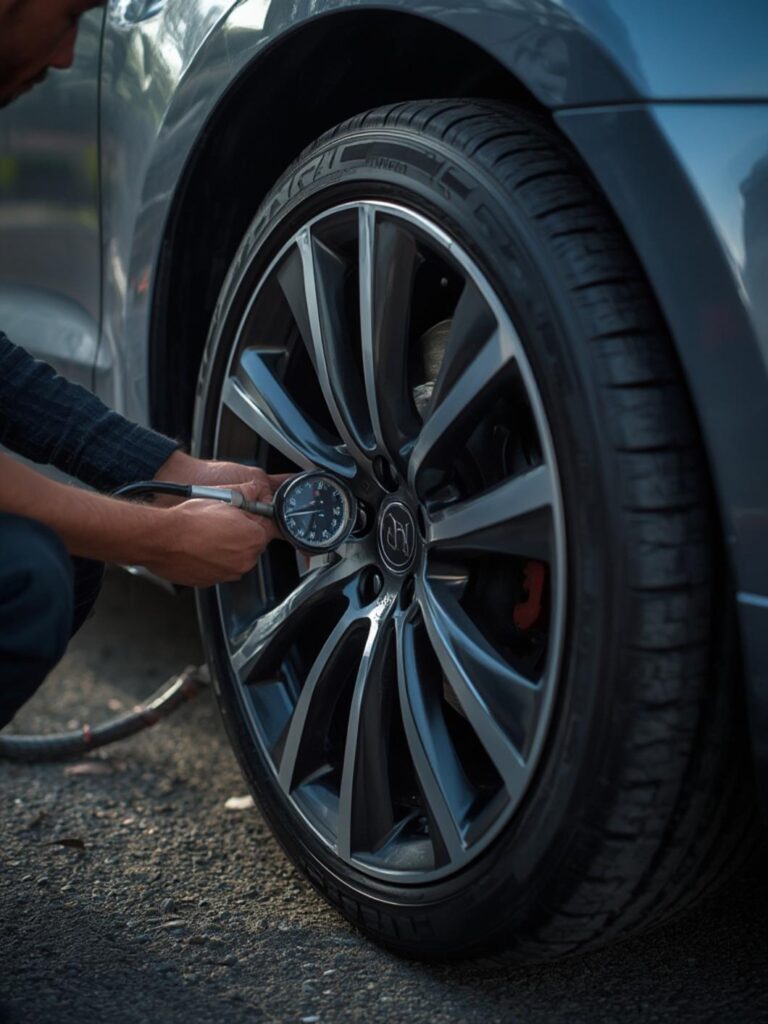
3. Check tire pressures when cool: Tires should be checked when cold for accuracy. Wait at least 3 hours after driving.
4. Consult your vehicle manual: Locate the recommended PSI on the driver’s door jamb or manual—not the maximum PSI on the tire itself.
5. Check all four tires plus spare: Even if only one triggers the TPMS light, inspect all tires.
6. Adjust to recommended pressure: Add or release air as needed to match specifications.
7. Replace valve stem caps: These small parts prevent air leaks and debris contamination.
8. Reset the TPMS system: Many vehicles require a manual reset—consult your owner’s manual for the specific procedure.
Benefits / Advantages
Responding properly to your TPMS warnings provides numerous benefits:
– Improved fuel economy (up to 0.3% per 1 PSI maintained)
– Extended tire life (up to 25% longer with proper inflation)
– Better handling and shorter braking distances
– Reduced risk of blowouts and dangerous tire failures
– Lower emissions from improved vehicle efficiency
– Prevention of uneven tire wear patterns
– Early detection of slow leaks before they become hazards
Tips, Alternative Methods, or Driving Advice
– In winter, consider setting pressure 2-3 PSI higher than recommended (still within manufacturer range)
– Some vehicles have direct TPMS (pressure sensors in each wheel) while others use indirect systems (wheel speed sensors)
– Keep a portable inflator in your vehicle for emergencies
– If your TPMS light flashes before staying solid, this often indicates a system malfunction rather than pressure issues
– Consider upgrading to programmable TPMS sensors for vehicles frequently carrying heavy loads
– Learn your vehicle’s reset procedure—some require driving for 10 minutes above 20 mph after adjustment
Common Mistakes to Avoid
1. Ignoring the warning light: Many drivers continue driving for weeks with active TPMS warnings.
2. Checking pressure when tires are hot: This gives falsely elevated readings.
3. Setting all tires to the same pressure: Front and rear tires often require different pressures.
4. Forgetting seasonal adjustments: Failing to compensate for temperature changes.
5. Overlooking the spare tire: Some vehicles monitor the spare tire pressure too.
6. Replacing TPMS sensors improperly: Sensors must be correctly programmed to your vehicle.
Storage / Maintenance Tips
– Store TPMS tools and maintenance supplies together in your garage
– Keep digital records of pressure readings to track patterns
– Replace TPMS sensors when changing tires (typically 5-10 year battery life)
– Have sensors recalibrated after tire rotations
– Clean valve stems regularly to prevent corrosion
– Consider protective valve stem covers in harsh climates
– Replace the entire sensor when batteries fail (they’re not serviceable)
Conclusion
Understanding and properly responding to your tyre pressure monitor light is an essential aspect of responsible vehicle ownership. By following the guidelines outlined above, you’ll not only extend the life of your tires but also enhance your safety on the road. Regular maintenance and quick response to TPMS light warnings will save you money and potentially prevent dangerous situations. Take the time to check your tire pressure regularly, even before warnings appear, and you’ll enjoy better fuel economy, handling, and peace of mind.
FAQs
Why does my TPMS light come on when it’s cold outside?
Tire pressure typically drops 1-2 PSI for every 10°F temperature decrease. Morning cold spells often trigger TPMS warnings that may disappear as tires warm up during driving.
Can I replace my own TPMS sensors?
While possible, specialized tools and programming equipment are required. Most DIY mechanics should have this done professionally to ensure proper programming to your vehicle’s system.
Why does my TPMS light come on after I’ve rotated my tires?
Many vehicles need sensor position relearning after rotation. Some systems automatically relearn positions after driving, while others require manual reprogramming.
Is it safe to drive with the TPMS light on?
For short distances at reduced speeds, it’s generally safe, but you should check your tire pressure as soon as possible. Significantly underinflated tires increase blowout risk.
How accurate are built-in tire pressure monitoring systems?
Most systems are accurate within 1-2 PSI and trigger warnings when pressure falls 25% below recommended levels. Always verify with a quality pressure gauge.